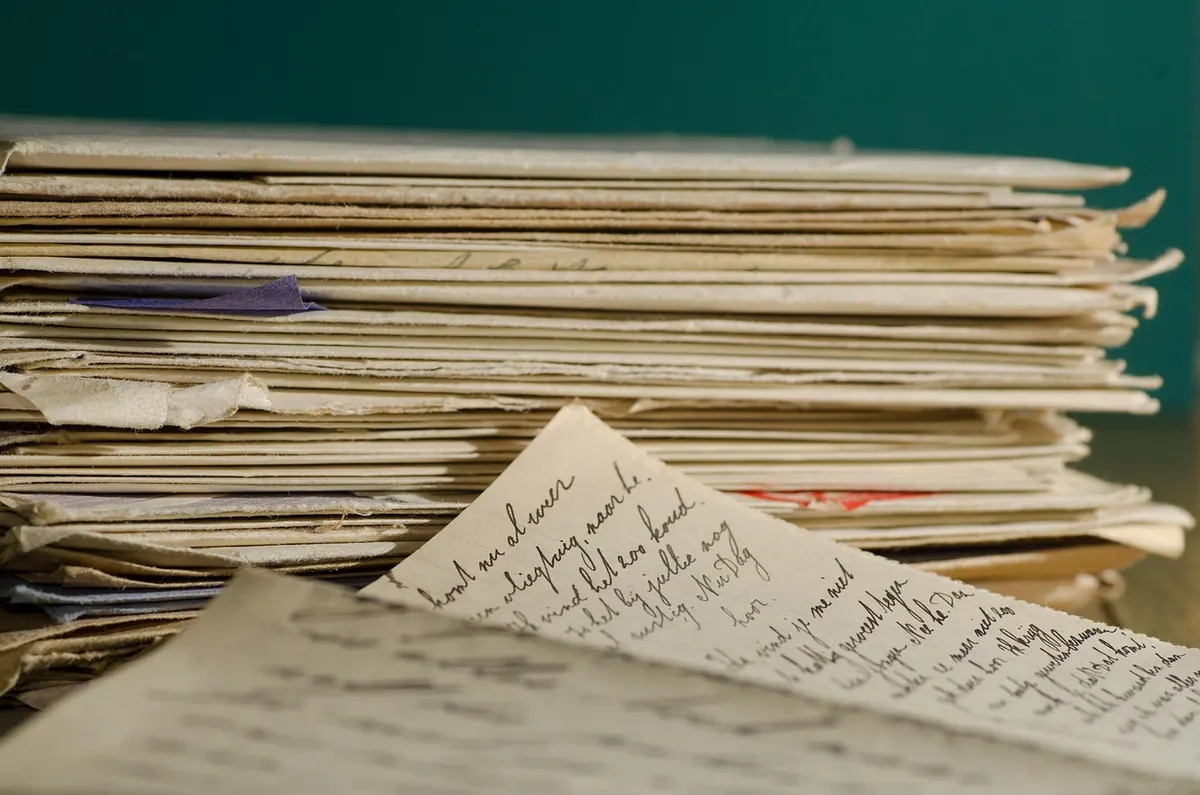
Paper Weight Explained: Choosing GSM and Texture for Handwritten Letters
Choosing paper for a handwritten letter comes down to two questions a single number cannot answer: how heavy should the sheet feel in the hand, and how will your pen behave on it? The label on the pad gives you the first and hides the second. A 100 gsm sheet with generous sizing will flatter a fountain pen; a 100 gsm sheet built for laser printers can turn the same nib into a fuzzy, bleeding line. What follows is what the numbers actually mean, what the textures do to ink, and how to test a stack before you commit to a box of it.
What GSM Really Measures
GSM stands for grams per square meter. It is a measure of mass, not thickness. Caliper — the physical thickness of a sheet — is measured separately, in millimetres or in "points" (thousandths of an inch). Two papers can share a GSM and feel entirely different, because the fibre blend and how tightly the sheet is pressed change how much bulk it has.
That is why a 100 gsm laid or cotton sheet often feels more substantial than a 120 gsm smooth bond. It is also why airmail paper at 60 gsm can feel crisp rather than flimsy. If you are buying online and only one number is listed, GSM is the useful starting point — just do not expect it to predict stiffness, opacity, or how the surface takes ink.
The American pound system adds confusion. It is a "basis weight" tied to the size of the parent sheet, so 24 lb bond and 24 lb cover are not comparable, and 20 lb bond lands roughly near 75 gsm while 65 lb cover sits closer to 176 gsm. When a listing offers both, trust the GSM.
The Working Ranges for Letters
For a letter you intend to write, fold, and post, most of the useful territory sits between 80 and 120 gsm. Here is how the bands break down in practice.
- 60–70 gsm: Airmail and onionskin territory. Light, slightly translucent, and cheap to post. Fine for ballpoint and pencil; wetter pens will show through to the reverse.
- 80–90 gsm: The everyday default, roughly what your printer tray holds. Acceptable with gel and rollerball, unpredictable with a broad fountain nib.
- 100–120 gsm: The sweet spot for correspondence. Enough body to feel considered, thin enough to fold cleanly without scoring, and usually sized well enough for fountain pens.
- 120–160 gsm: Heavy writing paper, note cards, and short letters. Score the fold or the crease will crack and look shabby.
- 200 gsm and up: Cardstock. Perfect for a folded note or a photo enclosure; it will not fold gracefully, and a thick stack of it changes your postage.
Surface Finish: Where Ink Meets Paper
Coated and smooth
Coated stock has a clay layer pressed into the surface. Lines stay crisp with almost no feathering, which suits gel pens, fineliners, and handwriting that needs to look sharp. The catch is drying time: ink sits on the coating rather than soaking in, so it can smudge minutes later and will smear badly under a left hand. Keep a blotter sheet or a piece of card under your palm.
Uncoated, wove, and laid
Uncoated paper drinks ink, which means fast drying and a slightly softened line. Sizing — the internal treatment that controls absorbency — is what separates a good letter sheet from a blotting pad. Laid paper has the fine ribbed pattern you see on traditional stationery. It looks wonderful with a dip pen and italic script, but a very fine fountain nib can catch in the ridges and spit tiny drops of ink. Wove is the plain, even surface most people picture when they think of writing paper.
Cotton and rag
Cotton-content sheets (often 25% or 100%) have a soft, slightly toothy surface and a lovely muted crackle when folded. They are heavier in feel per GSM, forgiving with fountain pens, and excellent with pencil. One naming trap: "vellum" describes translucent paper in some markets and a smooth cardstock finish in others. Check before you order a ream of the wrong thing.
Bleed, Feathering, and Ghosting
Three different problems get lumped together as "the paper is bad."
- Feathering is ink wicking sideways along the fibres, producing a hairy edge.
- Bleed is ink striking through to the other side of the sheet.
- Ghosting is the shape of your writing being visible on the reverse without ink transferring. It is normal on light paper and not a defect.
Matching pen to paper fixes most of it:
- Ballpoint: works on nearly anything, including coated stock. Skip very rough textured paper, which clogs the tip.
- Gel: crisp on smooth uncoated paper, prone to smearing on coated surfaces.
- Rollerball: wet and fast, so it ghosts heavily on 60–70 gsm sheets.
- Fountain pen: needs internal sizing. Aim for 90–120 gsm uncoated; broad nibs want the upper end.
- Fineliner and technical pen: fine on smooth uncoated stock, disappointing on absorbent paper.
- Pencil: texture is an advantage. Toothier sheets give graphite depth that glossy card refuses to hold.
Folding, Weight, and Mailing
Above about 160 gsm, fold with a bone folder or the back of a spoon along a straight edge, and score the line first. Fold with the grain rather than against it for a cleaner crease; if you do not know the grain direction, bend the sheet gently both ways and keep the easier fold.
Postage is calculated by weight, so paper choice has a direct cost. Most postal services cover a standard letter with one stamp up to roughly an ounce (about 28 grams), with extra postage above that. Five sheets of 80 gsm A4 come to around 25 grams, plus the envelope, which is comfortably inside the limit. The same letter on 120 gsm may push you over. Very stiff, rigid, or oversized envelopes can also attract a surcharge, since they cannot run through sorting machines. Check current rates with your postal service before you print a hundred envelopes.
Match your envelope to your paper. An 80 gsm sheet inside a 70 gsm envelope feels thin and buckles; a 100–120 gsm envelope holds its shape and protects the folded edge.
How to Choose Before You Buy
- Pick the pen first. It narrows the field faster than any weight chart.
- Test on the actual paper, not on a scrap of printer paper. Write a line, wait three minutes, then check the reverse and rub the surface with your thumb.
- Buy ten sheets, not a box. Paper is a personal decision and returns are tedious.
- Weigh one filled, sealed envelope on a kitchen scale before you mail the batch.
- Keep a blotter card in your writing folder for coated and heavily sized stock.
The Short Version
For most handwritten letters, a 100–120 gsm uncoated sheet with decent sizing handles fountain pens, gel pens, and ballpoints, folds without scoring, and still mails with a single stamp. If you write with a broad nib, go heavier; if you write postcards and airmail to save weight, go lighter and accept some ghosting. Buy small, test with your own pen, and let the texture do the rest.
Photo: Andrys / Pixabay

What Your Local Post Office Can Do That a Mailbox Can't
A mailbox only collects mail. The counter hand-cancels, certifies, rents PO boxes, and helps with money...
How to Write a Thank-You Note After a Job Interview
Timing, structure, and sample wording for a handwritten thank-you note after a job interview, plus the...
About Us