The Before-You-Mail Checklist: 12 Details That Decide Whether Your Letter Arrives
There's a particular sound a letter makes when it lands in the postbox: a soft slap, then nothing. In that moment the job feels done. But most letters that never arrive were sealed with one small, fixable problem inside — an apartment number left off, a postal code one digit wrong, a flap that looked stuck but wasn't. Catching those takes sixty seconds. Undoing them takes weeks. Here's what to check before the envelope leaves your hand.
The Address Block: Plain, Complete, and On One Side
Write the delivery address in block form on the front, in the lower half or center of the envelope. Use three or four lines and keep each element on its own line: recipient name, street address, then city, state or province, and postal code. If you're mailing abroad, add the country name in capitals on the final line.
Uppercase letters in dark ink are easier for both people and sorting machines to read than a flowing cursive hand. Print clearly, leave a comfortable margin around the block, and don't crowd the address against the stamp. Never write the delivery address on the back of the envelope; the front is the side that gets read first.
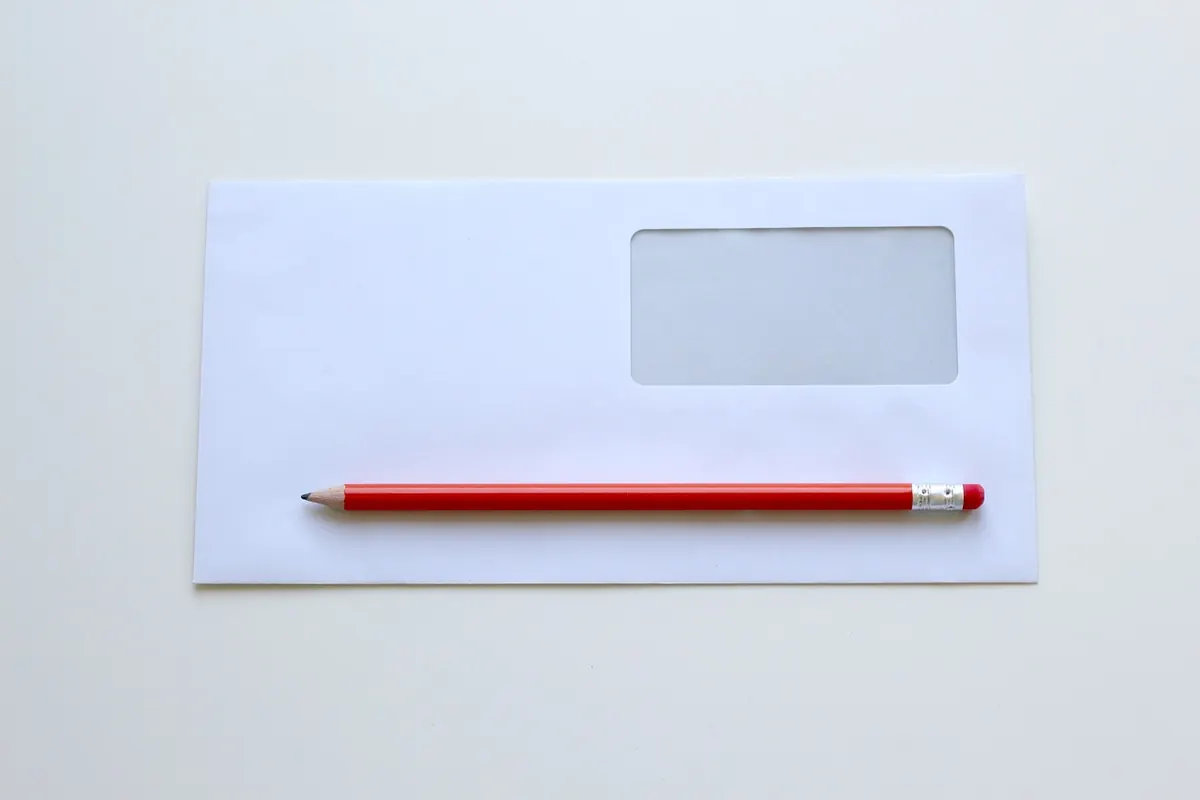
Printed labels work well if they lie flat and don't wrinkle. Keep them away from the top-right corner, where the stamp or postage label needs to sit. Pencil is a poor choice — it smears, fades, and looks like a rough draft.
The Return Address Earns Its Ink Every Time
Put your return address in the top-left corner of the front, in the same block format but slightly smaller. For social letters and invitations, the back flap is also acceptable and looks tidier.
This isn't a formality. Mail that can't be delivered — wrong apartment, moved recipient, damaged label — is returned to the sender if there's a return address. Without one, it goes into the undeliverable pile, and you'll never know it went missing. If the contents matter at all, the return address matters.
Details That Quietly Decide Delivery
Numbers, directions, and units
- Directionals change everything: 12 N Oak Street and 12 S Oak Street are different buildings.
- Apartment, suite, unit, and floor numbers belong on the street-address line, not floating below the city.
- Rural route and box numbers should be written exactly as the recipient gave them.
- If the recipient uses a PO box, mail sent to their street address may sit unclaimed or come straight back.
Names and businesses
Use the recipient's full name or at least an initial and surname. "Grandma" and "Dave from work" won't help anyone. For businesses, include the department or floor when you know it, and spell the company name the way the company spells it.
If someone moved recently, confirm the address before you write it. Forwarding is a courtesy with an expiry date, not a permanent redirect.
Sealing, Stuffing, and Shape
Fold the letter so the recipient reads it right-side up. Slip it in with the top of the page facing the back of the envelope; when the flap is torn open, the first line greets them instead of an upside-down paragraph.
Don't overstuff. A bulky envelope gets charged more, may need extra postage, and runs a higher chance of splitting at a sorting machine. If the flap strains, choose a larger envelope rather than forcing it.
Press the flap down firmly along its whole length. Old gummed flaps benefit from a quick swipe of a glue stick. Clear tape along the sealed edge is fine if you're nervous, but it won't rescue a flap that isn't properly closed underneath. Skip paper clips and staples — they snag in automated equipment. Wax seals and ribbons look wonderful and usually need to be handed to a clerk rather than dropped in a box, since they may not survive machines.
Postage: Weigh It, Don't Guess It
A single sheet or two in a standard envelope is usually straightforward. Beyond that, weight adds up faster than people expect, especially with cardstock, photos, or several pages. A kitchen scale settles the question in seconds; the current rates are always listed on your postal service's website.
Place the stamp in the top-right corner, right way up, with clear space around it. Square envelopes, rigid contents, lumpy inserts, and unusually thick mail often fall into a higher category and may need additional postage. International mail is a different rate and should be marked as such. When in doubt, ask a clerk to weigh it — it takes a minute and costs nothing.
The 12-Point Before-You-Mail Checklist
- Recipient's name is complete and spelled correctly.
- Street number and street name match your source exactly.
- Directional (N, S, E, W) is present if the address has one.
- Apartment, suite, or unit number is included on the street line.
- City, state or province, and postal code are all correct and in the right order.
- Country name is added in capitals for international mail.
- Return address is written in the top-left corner or on the back flap.
- The address area is clean — no stickers, smudges, or stray marks.
- The letter is inside and the flap is sealed along its full length.
- The envelope lies flat and isn't bulging or lumpy.
- Postage matches the weight, size, and destination.
- You've read the address aloud once, comparing it letter by letter with the source.
If Something's Already Wrong
Noticed the mistake while you're still holding the envelope? Fix it cleanly — cross out the wrong line once, write the correct version beside it, and keep it legible. If it's a mess, start a fresh envelope; a clean one costs less than a lost letter.
If it's already gone and the address was wrong, your return address is the safety net. And if you're mailing something with a deadline — an application, a contract, a payment — hand it to a clerk and ask about proof of mailing rather than dropping it in a box. For matters with legal or financial consequences, confirm the requirements with the recipient or a qualified professional first.
Before you seal anything important, photograph the finished envelope. It takes a second, and it's the easiest way to answer "when did I send that, and to where?" six weeks later. Then walk to the postbox, listen for the slap, and let it go.
Photo: Monfocus / Pixabay

What Your Local Post Office Can Do That a Mailbox Can't
A mailbox only collects mail. The counter hand-cancels, certifies, rents PO boxes, and helps with money...
Paper Weight Explained: Choosing GSM and Texture for Handwritten Letters
A practical guide to paper GSM, caliper, finish, and bleed behaviour, so you can match the right sheet to...
About Us